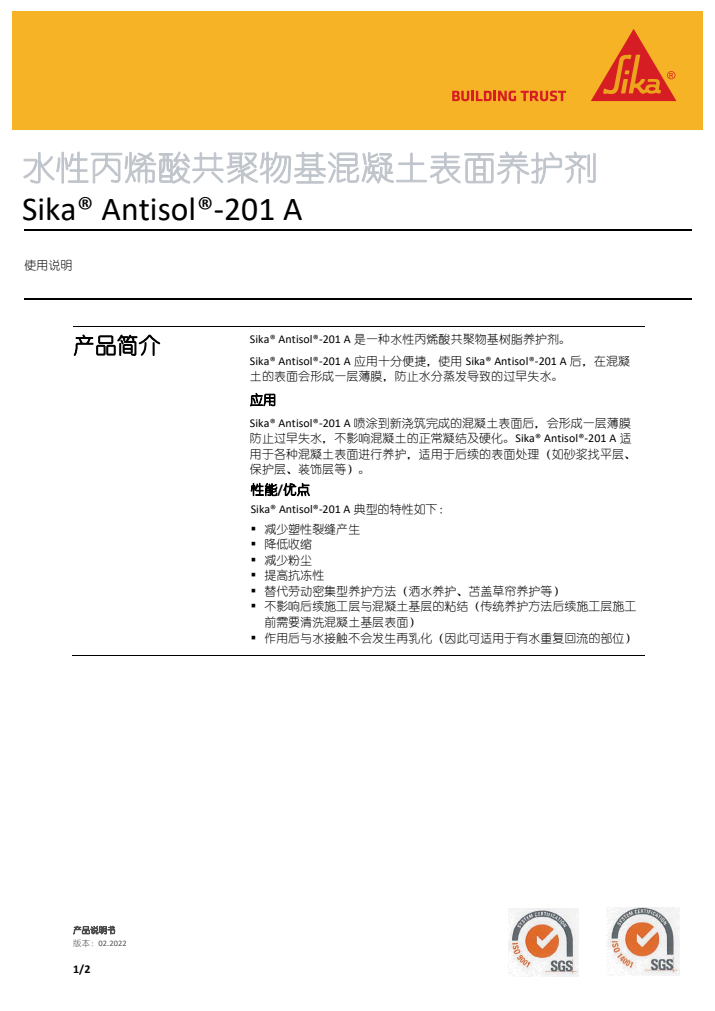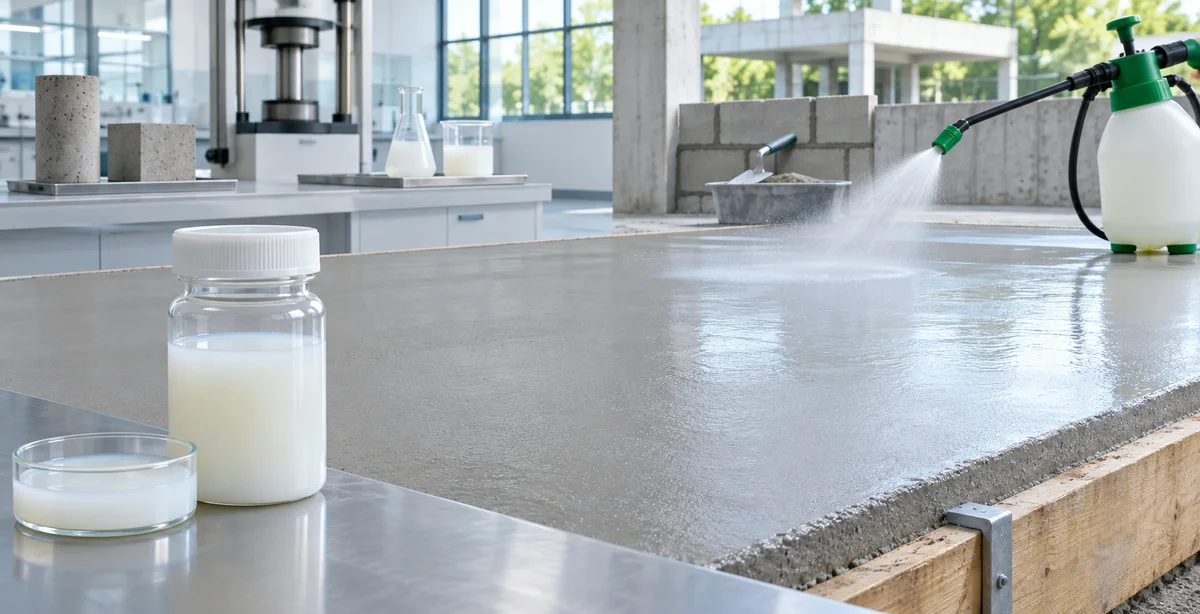
Help protect concrete products from efflorescence and water ingress
Xystone AEC-1 is a low-viscosity, high-penetration liquid emulsion designed to reduce efflorescence, limit water penetration and help preserve the appearance of concrete and masonry. It offers two application routes: incorporation into wet-cast or dry-cast concrete during production, and direct treatment of suitable concrete or masonry surfaces.
For producers of colored pavers, concrete blocks, roof tiles and artificial stone, AEC-1 provides a practical option to evaluate when white deposits and changes in surface appearance affect product presentation.
Request AEC-1 Sample or Quote Download AEC-1 TDS (Chinese PDF)
Choose the application route for your concrete products
| Application route | Typical products or substrates | Use stage |
|---|---|---|
| Integral anti-efflorescence admixture | Artificial stone, concrete bricks and blocks, paving blocks and concrete roof tiles | Add during wet-cast or dry-cast concrete production |
| Surface treatment | Decorative stone and concrete, stone or brick masonry, and concrete walls | Apply to a suitably prepared surface; new substrates are recommended in the TDS |
The intended benefits are reduced water penetration, reduced efflorescence and improved retention of the original appearance. Confirm the finish, application method and performance on your own substrate before production use.
Real concrete specimens: before and after the efflorescence test
The photographs below are reproduced from the AEC-1 supplier presentation. In each photograph, the left-hand column is the comparison product at a reported dosage of 0.5%; the right-hand column is AEC-1 at a reported dosage of 0.8%.
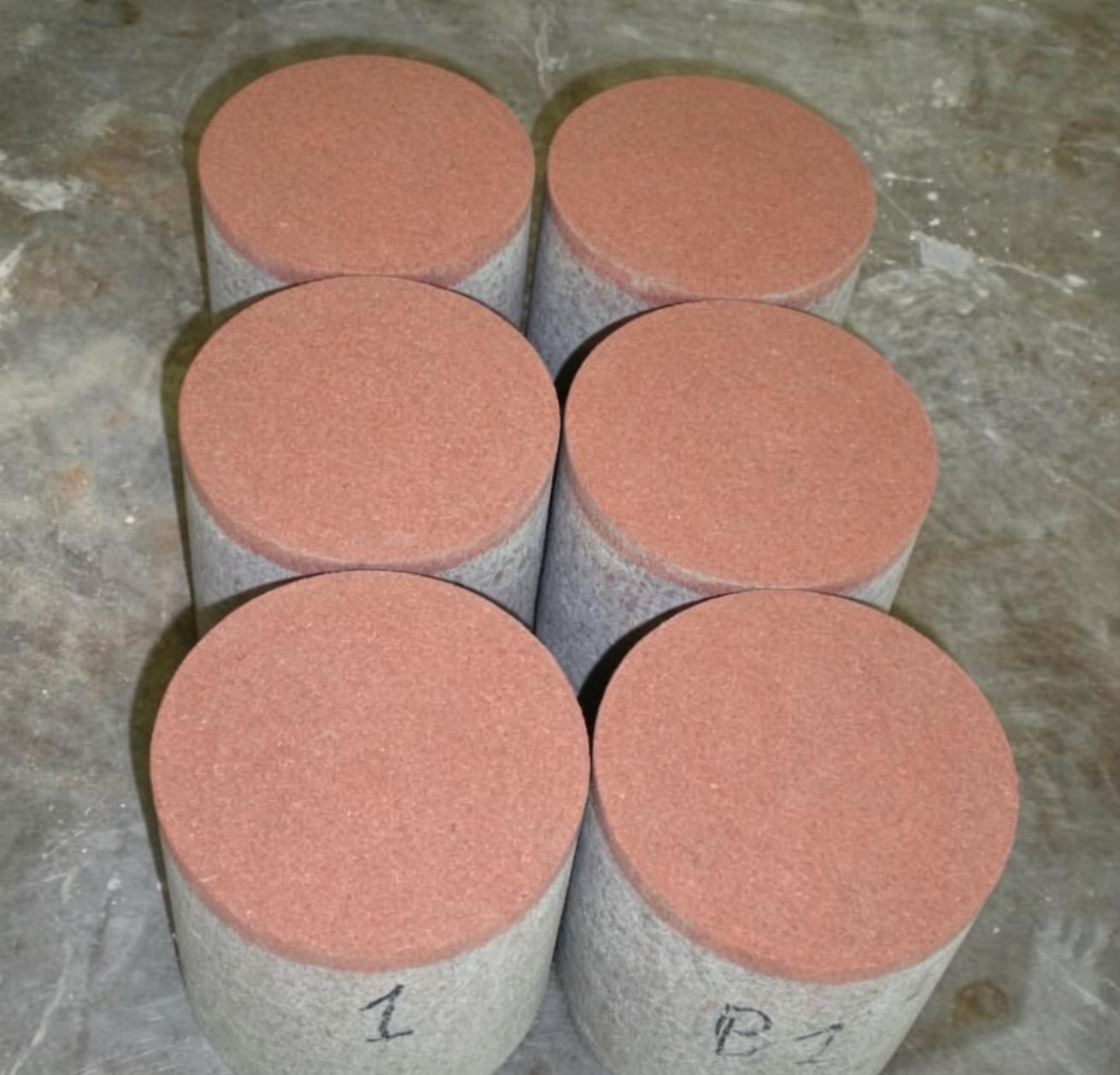
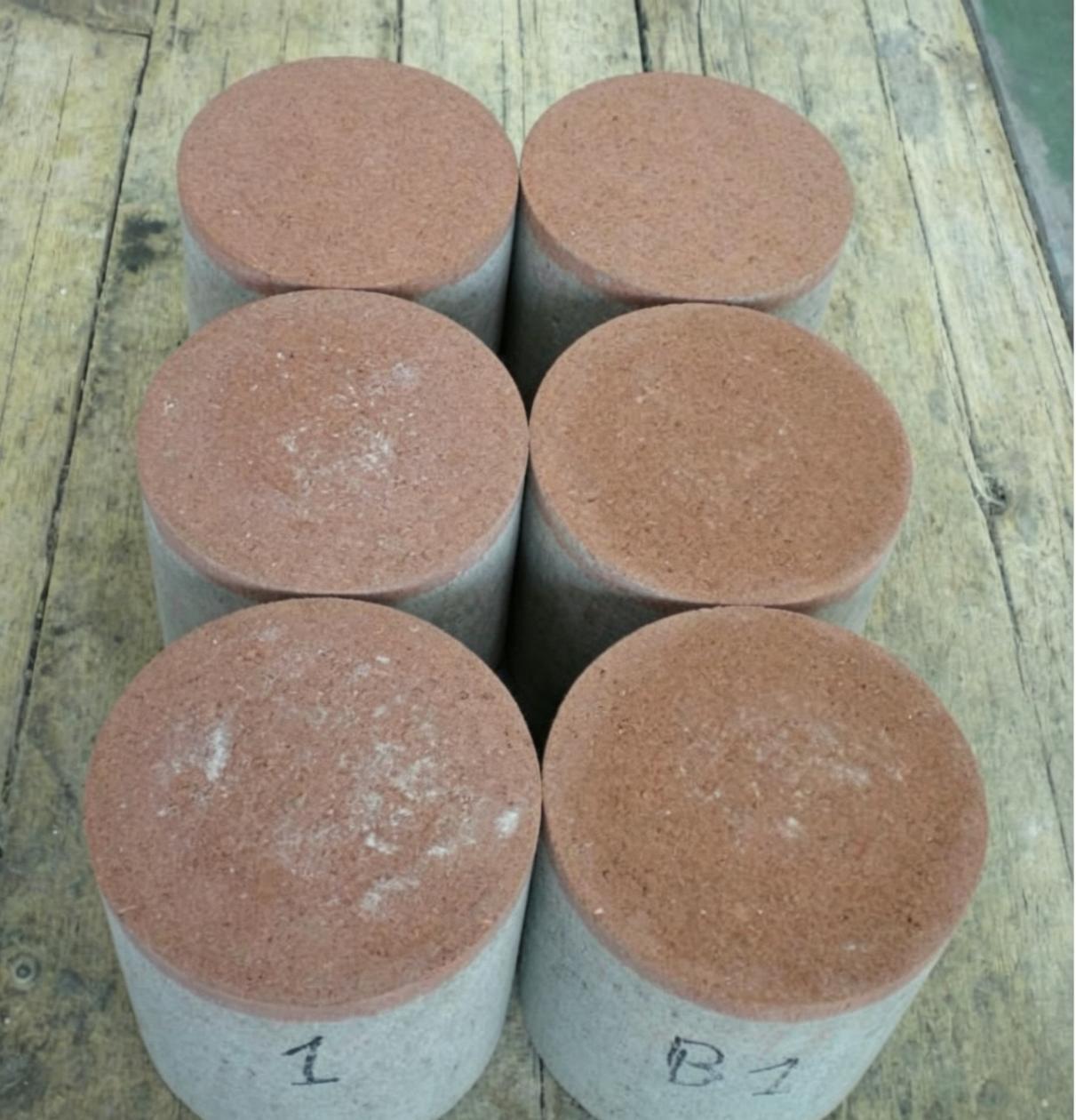
Source: AEC-1 supplier presentation, page 6. These are visual results from the reported comparison, not a guarantee for every concrete mix. The slide does not state the dosage calculation basis, mix design, test duration, curing conditions or detailed test procedure.
Reported water absorption results
The supplier presentation reports the following results in a table labelled EN 1338. They provide a starting point for formulation trials with pavers and other concrete products.
| Campione | Reported trial dosage* | Reported water absorption |
|---|---|---|
| Blank control | No additive reported | 6.90% |
| Fatty-acid-based comparison product | 0.5% | 6.14% |
| AEC-1 | 0.4% | 4.75% |
| AEC-1 | 0.8% | 3.33% |
*Source: AEC-1 supplier presentation, page 7. The trial dosage basis, mix proportions, specimen age, curing conditions and replicate results are not provided on the slide. The 0.4% entry is a reported trial point below the TDS recommended integral range; it is not a dosage recommendation. These data do not establish certification or complete conformity of a finished product with EN 1338 or any other standard.
How to use AEC-1 as an integral admixture
- Calculate dosage on total cementitious materials: the TDS recommends 0.5-3% by mass of total binder, not by total concrete mass. For example, 100 kg of cementitious materials corresponds to 0.5-3 kg of AEC-1.
- Mix AEC-1 with water, then incorporate it into the concrete mixing process. Evaluate water demand and fresh-concrete behavior in trials; the TDS notes a possible water-reducing effect.
- Confirm the selected dosage against your target surface appearance, water absorption, setting and strength requirements before scaling up.
- Protect cast products from rain for 24-36 hours. The TDS specifies no water curing or immersion curing. Elevated-temperature or high-humidity non-steam curing may be used according to the TDS; agree suitable production conditions with technical support.
How to use AEC-1 as a surface treatment
- Prepare a sound, clean surface free of oil, grease, dust and loose particles. The TDS recommends new, semi-dry concrete with no standing water. Existing substrates should be cleaned or ground back to a fresh surface; allow washed surfaces to dry fully.
- Stir AEC-1 before use. Apply directly by brush, roller, spray or impregnation, as appropriate for the component.
- Applicare two coats. Apply the second coat as soon as the first is surface-dry, and complete treatment within the same day.
- Do not apply below 5°C. Protect the treated surface from dirt, traffic and rain for 24-36 hours.
Request substrate-specific advice on coverage and consumption before ordering. The supplied TDS does not specify a universal coverage rate or dilution ratio.
Plan a meaningful production trial
Compare an untreated control with selected AEC-1 dosages within the TDS range, using the same materials and production conditions. Record the mix proportions, dosage calculation basis, compaction, curing regime, specimen age and test method. Compare visible efflorescence and water absorption, and check setting, strength and appearance against your own requirements. This makes the results relevant to your pavers, blocks or other products rather than transferring a presentation result directly to a different mix.
Questions before ordering
Can AEC-1 be used in both wet-cast and dry-cast concrete?
Yes. Both production routes are listed in the TDS. Trial the dosage and curing conditions with the actual mix and manufacturing process.
Is the integral dosage also the surface-treatment consumption?
No. The 0.5-3% range refers to mass of total cementitious materials for integral use. It is not a surface coverage rate. Share your substrate, area and application method to obtain surface-treatment guidance.
Can the comparison data replace testing of our finished products?
No. The reported data help identify a candidate for trials. Finished-product acceptance requires the applicable test method and your own production conditions.
What information is needed for a sample or quotation?
Tell us the product type, wet-cast or dry-cast process, intended integral or surface use, binder composition, curing method, current efflorescence problem, trial quantity and destination country. For surface treatment, also include substrate condition and area.
Technical documents and supply
Download the original AEC-1 Chinese technical data sheet (PDF). Packaging: 1000 kg IBC. Request the current SDS, storage and shelf-life instructions, English technical documentation, sample availability and shipping quotation from our team.
E-mail: [email protected]
Telephone: +86 188 0159 7977